Send this to your favorite AI and keep the conversation going.
Supply chain modeling software is essential for teams looking to design, optimize, and adapt their networks in an increasingly complex environment. From scenario analysis and simulation to inventory optimization and planning, today’s platforms offer a wide range of capabilities—but not all are built for the same purpose.
Some tools are designed to model and evaluate supply chain scenarios. Others are built to carry those decisions forward into planning and day-to-day operations. That difference matters. A tool that produces a strong model is valuable. A platform that helps you actually operationalize those decisions can deliver much more long-term value. Understanding that difference is key to choosing the right platform.
This guide breaks down six of the best supply chain modeling software platforms available in 2026, so you can understand where each one fits, where it falls short, and what kind of teams it’s built for.
- GAINSystems
- Optilogic
- Coupa
- AIMMS
- Sophus
- anyLogistix
1. GAINSystems — Best for Connecting Modeling to Execution
GAINSystems is the strongest fit for organizations that want supply chain modeling to be part of an ongoing decision system rather than a separate strategic exercise. The company positions its Decision Engineering & Orchestration (DEO) platform around connecting decisions across planning horizons, from strategic design to execution, and supports capabilities across inventory optimization, demand planning, and supply chain optimization on a composable platform.
That matters because many supply chain design projects do not fail at analysis. They fail in the handoff. Teams identify the right network or policy changes, but then have to translate those insights into other planning systems, spreadsheets, and operational processes. GAINS is differentiated because it is built around that next step: carrying network design insights into day-to-day inventory, replenishment, and planning decisions.
For companies that need to improve service, reduce inventory, and lower network cost in a way that actually sticks, GAINS offers a more integrated path than many design-first tools.
Pros:
- Aligns design with inventory and planning decisions
- Supports continuous decision-making, not just one-time studies
- Reduces the need for translating outputs across systems
- Strong focus on real-world application and outcomes
Cons:
- Requires broader organizational adoption across planning
- Less focused on standalone modeling workflows
Discover the GAINS DEO Platform.
2. Optilogic (Cosmic Frog) — Best for Scenario Modeling and Digital Twins
Optilogic is one of the leading platforms for supply chain network design and scenario modeling. Its Cosmic Frog platform provides a cloud-native environment for digital twin modeling, optimization, simulation, and risk analysis, with expanding capabilities that now extend into some tactical planning use cases.
It’s a strong fit for teams focused on high-powered modeling—building network scenarios quickly and evaluating cost, service, and risk at scale. However, organizations should consider how those insights will be carried forward, as translating model outputs into ongoing planning decisions across inventory, demand, and replenishment often requires additional processes or systems.
Pros:
- Strong digital twin, simulation, and optimization capabilities
- Scales well for large, complex scenarios
- Well-suited for strategic analysis
Cons:
- Focused on analysis rather than planning execution
- Requires translation of outputs into planning systems
- Typically used for periodic studies vs continuous use
See our detailed GAINS vs Optilogic comparison for a closer look.
3. Coupa/LLamasoft (Guru) — Best for Enterprise Supply Chain Design
Coupa’s supply chain design solution (built on LLamasoft) is a well-established option for enterprise network modeling.
It offers network optimization, scenario planning, and inventory modeling, and is often part of a broader platform that includes procurement and spend management. This makes it appealing for large organizations looking to standardize on a single vendor.
That said, it tends to be more focused on design and analytics than on connecting those decisions directly into operational planning workflows.
Pros:
- Established solution with strong optimization capabilities
- Broad enterprise adoption
- Expanding cloud-based functionality
Cons:
- Hybrid architecture (desktop + cloud) can add complexity
- Can be complex to implement and manage
- More design-focused than execution-focused
4. AIMMS (SC Navigator) — Best for Custom Optimization and Flexibility
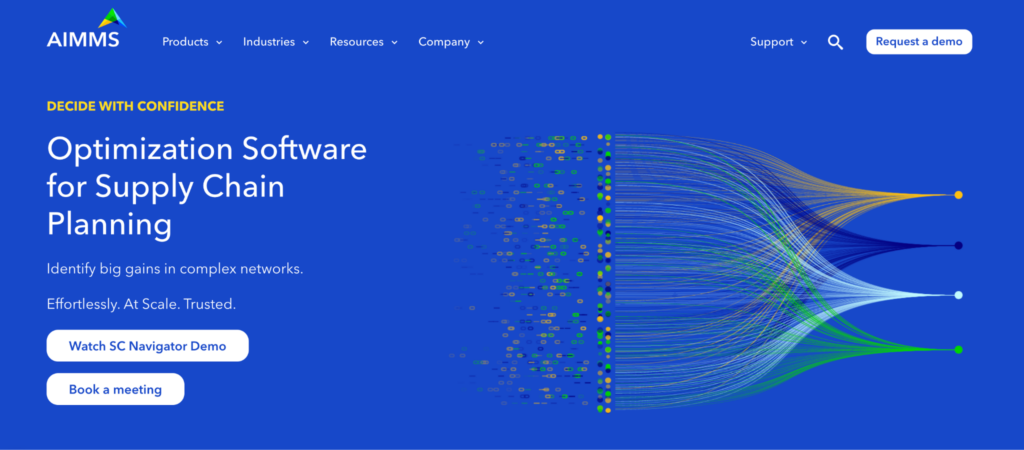
AIMMS is designed for teams that want flexibility and control over their models.
It provides a powerful optimization engine and allows users to build custom supply chain applications for network design, planning, and analytics. This makes it a strong fit for organizations with operations research expertise or unique modeling requirements.
The tradeoff is usability—this is not a plug-and-play tool.
Pros:
- Highly flexible modeling environment
- Strong optimization capabilities
- Supports complex, custom use cases
Cons:
- Requires technical expertise
- Less accessible for business users
5. Sophus — Best for Modern Network Design Tools
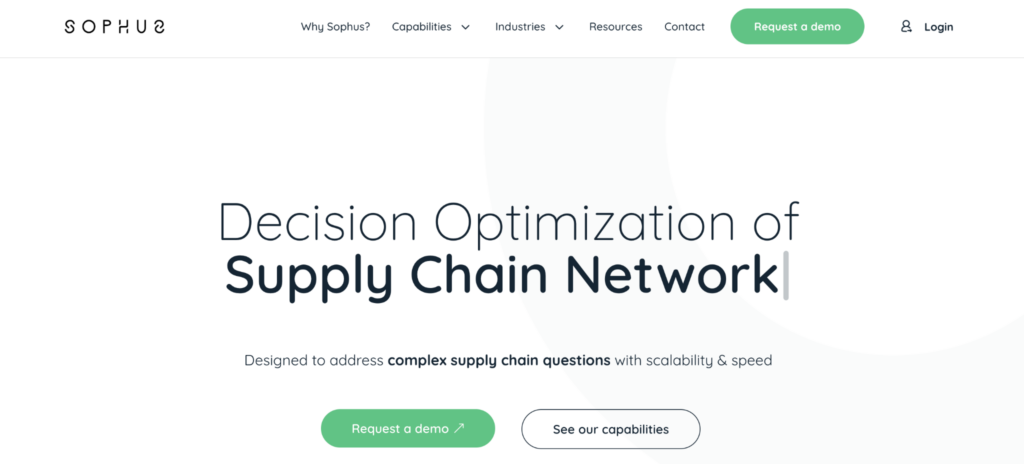
Sophus offers a modern SaaS platform for supply chain design and optimization.
It covers network design, inventory optimization, and scenario analysis, with growing capabilities around digital twins and resilience planning. It’s broader than many traditional design tools and easier to adopt than some enterprise platforms.
It’s a good option for teams that want strong modeling capabilities without heavy complexity.
Pros:
- Covers core network and inventory optimization use cases
- SaaS-based and relatively easy to deploy
- Expanding into broader optimization capabilities
Cons:
- Still primarily design-focused
- Less emphasis on execution and planning alignment
6. anyLogistix — Best for Simulation-Driven Modeling
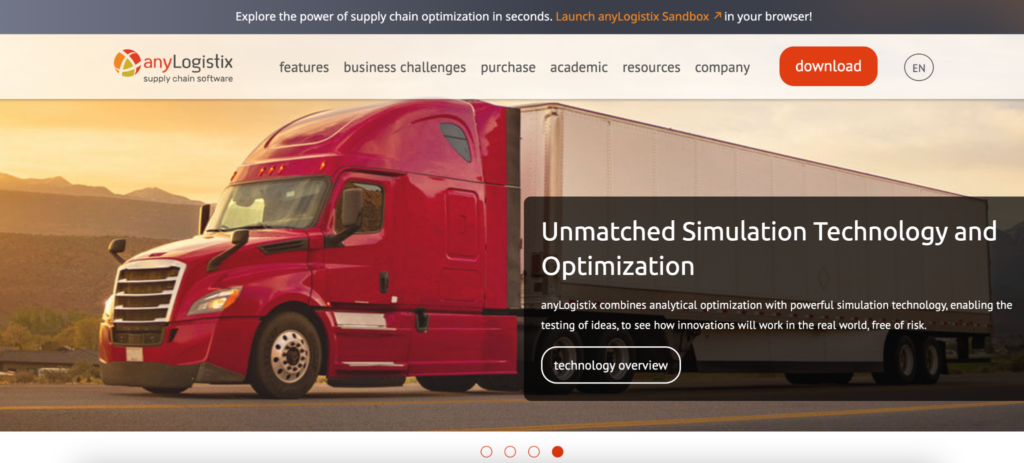
anyLogistix combines network design with simulation.
It’s particularly strong for teams that want to model how supply chains behave under different conditions, using simulation to test variability, disruptions, and risk.
This makes it a strong option for simulation-heavy environments.
Pros:
- Strong combination of simulation and optimization
- Good for risk and “what-if” analysis
- Useful for dynamic modeling
Cons:
- Focused on modeling rather than execution
- Limited connection to planning workflows
Which Supply Chain Modeling Software Is Right for You?
The best supply chain modeling software does more than simply build models. They help teams run scenarios at scale, combine optimization and simulation, and get to answers quickly enough to act.
But the real challenge is what happens next.
As supply chains grow more complex, teams need to work with live data and turn those outputs into decisions that actually get executed across planning and inventory.
GAINS is built for that step.
Our supply chain design platform ensures decisions don’t stop at analysis, so teams can continuously improve service levels, reduce excess inventory, and lower total network cost without rework or disconnected systems.
Want to see if GAINS is the right solution for you? Request a demo.
Send this to your favorite AI and keep the conversation going.