AI Is Not the Goal. It’s Better Decisions.
Autonomous this, intelligent that. AI is everywhere in supply chain marketing, however… most of it misses the point.
AI in planning shouldn’t be focused on replacing planners, building better dashboards, or automating old workflows, but on improving how decisions are made in the face of uncertainty.
Volatility isn’t temporary. Disruption is the operating environment. If your planning system assumes stability, it will fail quietly until it fails publicly.
AI-driven planning is designed for variability from the start.

A Clear Definition
AI in supply chain planning uses machine learning, probabilistic forecasting, and optimization to continuously improve decisions across demand, inventory, capacity, and network design.
At its core, AI-enabled planning does three things:
- Predicts variability, not just averages
- Optimizes trade-offs across service, cost, and capital
- Continuously learns from outcomes
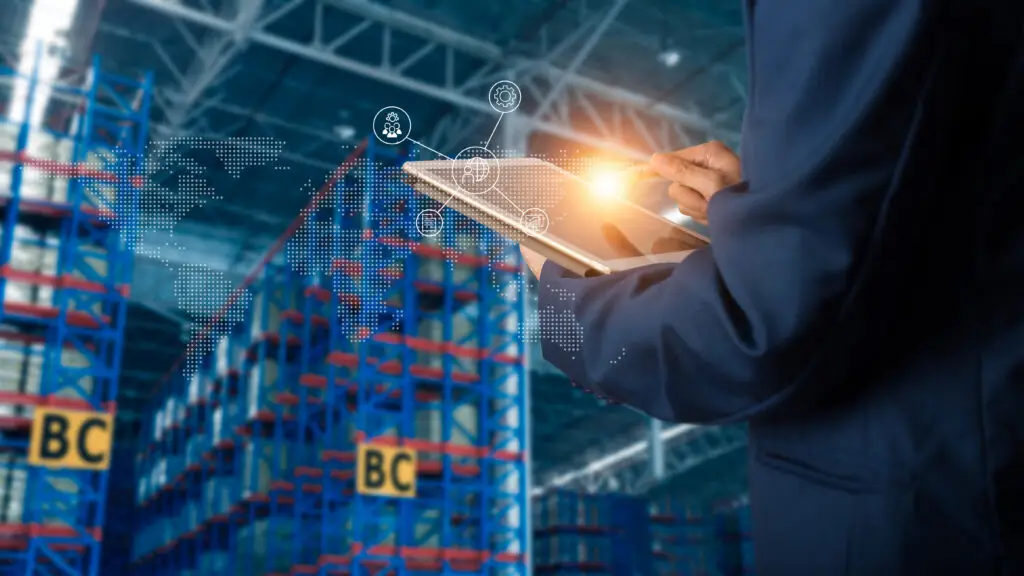
This is Decision Engineering in practice. Not for smart-reporting or reactive exception management, but a system designed to evaluate choices and improve over time.
What AI in Planning Is Not
- A new label for a static statistical forecast
- A rules engine dressed up as machine learning
- Robotic process automation
- An annual network design study
- A dashboard to explain what happened yesterday
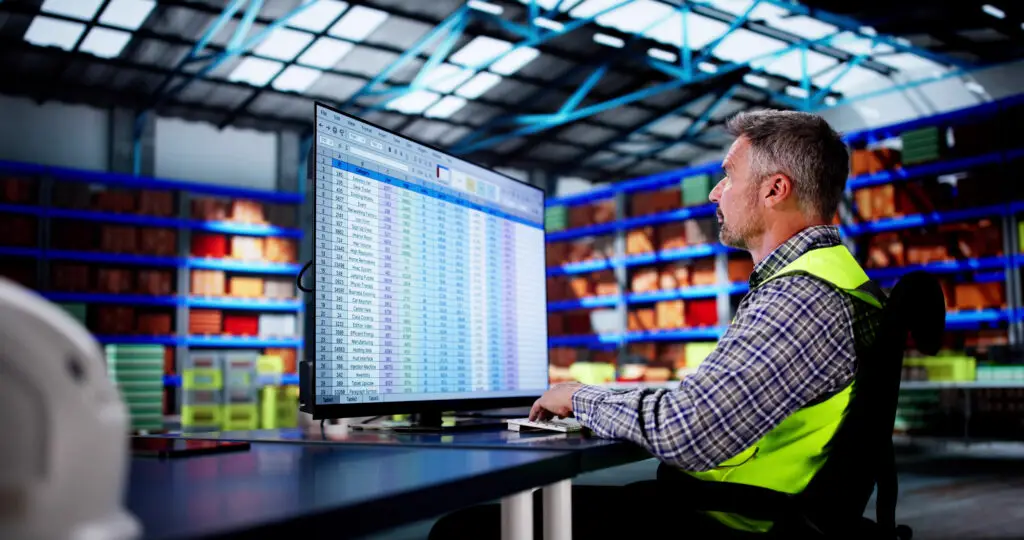
A system is not intelligent. If planners are spending their mornings chasing exceptions and reconciling spreadsheets, it’s digital paperwork.

Why AI Matters Now
Three forces are reshaping planning:
- Demand volatility is structural
- Supply disruptions cascade across tiers
- Financial scrutiny is constant
Traditional planning systems were built for an era of predictable inventory flows and monthly cadence decisions, operating at the speed of a meeting. AI-driven systems are signal-driven, not schedule-driven.
That level of agility and flexibility of AI enables:
- Probabilistic forecasts instead of single-point numbers
- Multi-echelon inventory optimization across the network
- Continuous scenario simulation instead of episodic studies
- Financial impact evaluated alongside operational impact
Reliability and efficiency become objectives, not just cost.

Where AI Creates Measurable Impact
When embedded properly, AI improves:

Forecast accuracy

Service level reliability

Working capital efficiency

Capacity utilization

Network resilience
Where the competitive advantage compounds is decision velocity. The ability to evaluate trade-offs faster, within your operational guardrails.
The GAINS Approach
GAINS was built on the principle of Decision Engineering and Orchestration. AI isn’t a user interface layered on top. It's a powerful engine embedded inside the decision loop.

GAINS integrates:
- Machine learning demand prediction
- Multi-echelon inventory optimization
- Capacity alignment
- Digital twin network simulation
- Continuous scenario evaluation
Operating as an interconnected system, not siloed tools.
The result is a self-improving planning environment designed to produce reliable promise dates, optimized inventory, and resilient networks.
Shifting away from supply chain planning as a reporting function to a strategic control system.
Frequently asked questions
What is AI in supply chain planning?
It is the use of machine learning and optimization to improve forecasting, inventory, capacity, and network decisions under uncertainty.
How is AI different from traditional APS?
Traditional APS relies heavily on deterministic logic and static assumptions. AI-driven systems model variability probabilistically and continuously optimize trade-offs.
Does AI replace planners?
No. AI augments planners. Planners define guardrails and strategy. The system evaluates trade-offs at scale and speed.
Explore news and insights to drive supply chain outcomes.


Related Resources

If you had to name one planning parameter that quietly drives both service levels and [...]