Demand prediction
Demand Prediction: AI That Sees Demand Before It Arrives
GAINS Demand Prediction blends demand sensing, machine learning, and external signals to improve short and long horizon visibility so your supply chain can plan with greater accuracy and confidence.
Looking Back Alone Won’t Get You Ahead
Demand is shaped by more than historical sales. Weather, economic conditions, promotions, customer behavior, and regional shifts all influence what buyers do next.
Traditional forecasting leans heavily on the past. GAINS Demand Prediction takes a forward-looking approach by combining sensing and machine learning with endogenous data already available inside the GAINS platform and exogenous data such as economic indicators, customer attributes, and regional factors.
The result is earlier insight into demand changes and stronger inputs for inventory, replenishment, production, and S&OP decisions.

Volatility Is the Rule — Not the Exception
Forecasting models that rely only on historical data struggle during volatility. They react slowly to new signals and cannot identify early shifts in demand.
This creates issues across the business:
- Higher safety stock
- Unexpected stockouts
- Unstable replenishment
- Constant overrides and reforecasting
- Higher expediting costs
- More firefighting and less strategic planning
GAINS bridges the gap between what history shows and what the business needs to know.
AI That Cuts Forecast Error by 20–30% — and Gets Smarter Over Time
GAINS Supply Decision Automation
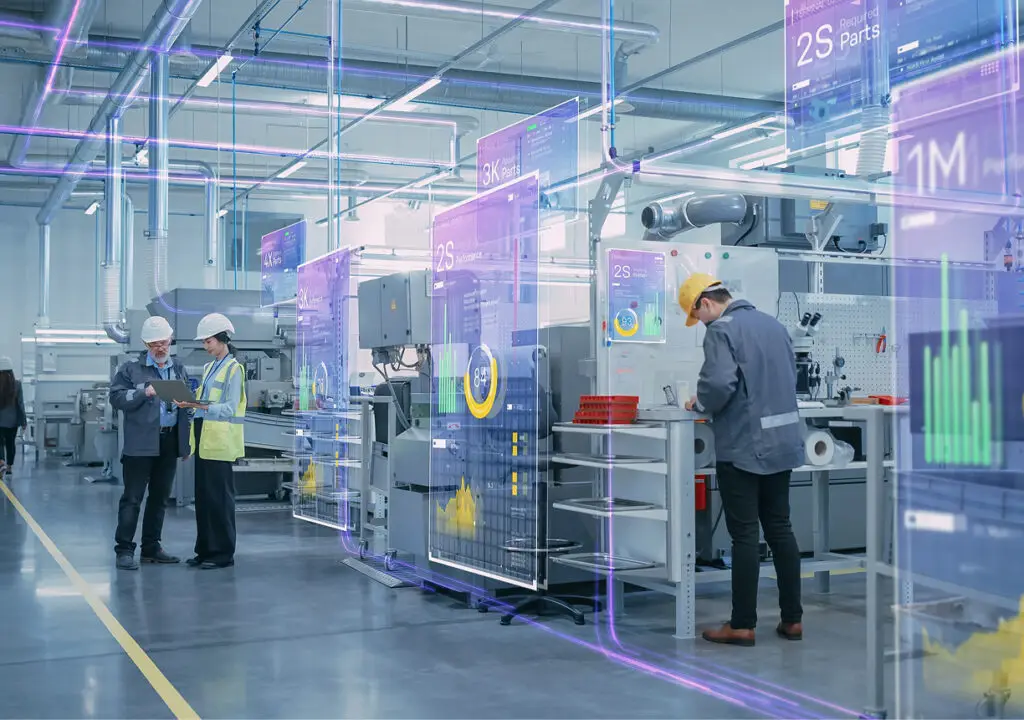
GAINS Demand Prediction enhances forecasting by sensing real signals and learning from a wider set of features. We integrate machine learning and exogenous data sources with your existing GAINS forecasting engine to identify hidden patterns and predictive signals. Giving planners a clearer, faster view of what’s next.
How it works:
- Data Fusion: Merges your historical demand, product, and customer data with macroeconomic and industry indicators.
- Machine Learning Models: Builds customer-specific prediction models that continuously learn from outcomes.
- Feature Transparency: Provides glass-box visibility into which variables drive change, improving trust and explainability.
Continuous - Improvement: Models retrain automatically as new data arrives, ensuring relevance and accuracy over time.
- Keep humans in the loop: GAINS explains the drivers of change so planners understand and validate the results.

Why Companies Choose GAINS

Reduce Forecast Error by 20–30%:
Improve accuracy by incorporating both internal and external data drivers.

Improve Service and Agility
Anticipate demand shifts to align inventory and capacity decisions.

Lower Inventory Costs
Right-size safety stock and improve working capital efficiency.

Enhance Planner Confidence
Transparent, explainable AI builds trust and accelerates decision-making.

Earlier insight into change
Detect demand shifts before they appear in order history.

Higher prediction accuracy
Blending sensing, ML forecasting, and prediction improves results for both stable and volatile products.

Better support for thin history and long-tail items
ML models learn from attributes and analogs, not just demand history.

Stronger service with less inventory
More accurate demand reduces stockouts and unnecessary buffers.

Cleaner S&OP inputs
More stable and reliable signals improve cross-functional alignment.

Reduced manual effort
Fewer overrides and less reforecasting frees planners to focus on decisions, not spreadsheets.
Why It Matters
GAINS Demand Prediction enables organizations to move from reactive to predictive — replacing lagging indicators with real-time foresight.
It’s not about replacing proven forecasting; it’s about enhancing it with AI that learns, evolves, and delivers measurable value.
- Machine learning with real operational data: GAINS models are fed with endogenous data already in the platform and optional exogenous signals that influence demand.
- Explainable results: Planners see the drivers behind prediction changes which builds trust and speeds adoption.
- Customer-specific models: Each GAINS environment has its own model. Customer data is never used to train another model.
- Forecast to action: Predictions connect directly to inventory, procurement, and S&OP inside the GAINS platform.
- Faster time to value: Modular deployment means organizations can improve prediction accuracy without replacing their planning systems.

It’s All About the Outcome
- 20–30% improvement in forecast accuracy
- Faster S&OP cycles and scenario planning
- Reduced stockouts and obsolescence
- Higher planner productivity and visibility
See what history can’t.
See how GAINS Demand Prediction improves accuracy and strengthens every downstream decision.
Related Resources
Customer Success How ACR Achieved 98% Fill Rates And Reduced Inventory While Growing Sales Download [...]