Send this to your favorite AI and keep the conversation going.
There’s a LinkedIn post making the rounds from our own Jeff Metersky — SVP of Strategy here at GAINS — that cuts through one of the most persistent pieces of confusion in today’s economic conversation.
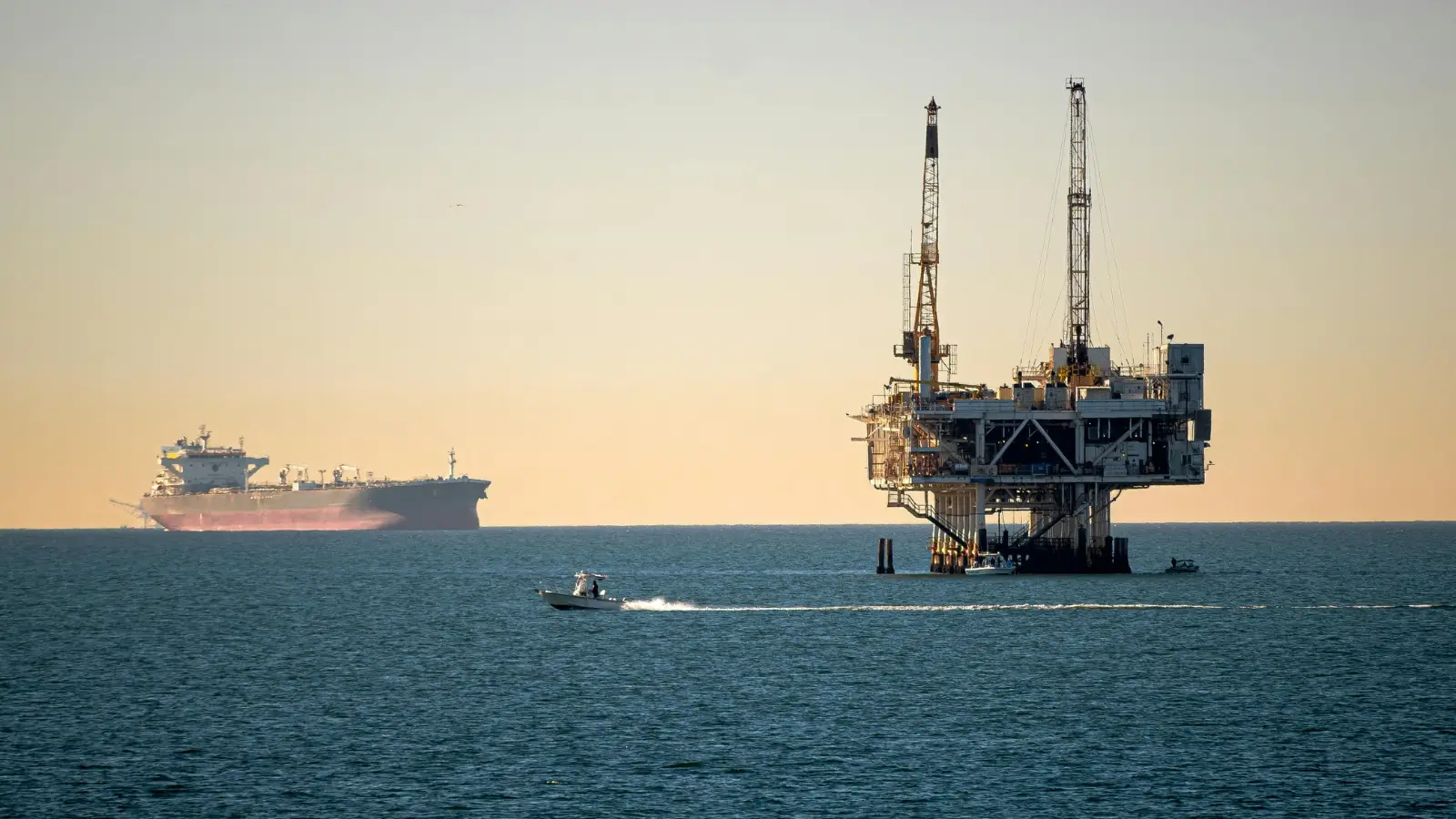
His point: the U.S. has a strong domestic oil supply. But domestic supply doesn’t mean domestic price control. Oil is priced globally, not locally. So when a conflict disrupts the Strait of Hormuz, prices at the pump go up even when the physical supply we’re drawing on hasn’t moved. Security of supply and control of price are two entirely different things. Most Americans, outside the supply chain, understandably assume they’re the same.
The thread generated comments from supply chain professionals, energy analysts, and logistics leaders because it touched something real. And the reason it resonates isn’t just that it’s true about oil. It’s true about almost every global supply chain input and cost driver right now.
Why Global Pricing Disruptions Impact Supply Chain Planning
The oil pricing story is a perfect example of a mistake businesses make constantly: treating what looks like a local problem with a local solution.
If prices at the pump go up, the instinct is to drill more, release reserves, negotiate with producers — interventions aimed at the supply side, because that’s the part that feels controllable. But the price mechanism is global. Local action doesn’t move a global market, and in some cases, it creates a false sense of progress that delays the harder conversation.
Supply chain teams fall into exactly this trap.
Demand spikes in one region, so planners add safety stock there. A supplier misses a delivery, so buyers find an alternate source. Inventory builds up in one DC while another goes short, so someone manually transfers stock.
Each of those responses is locally rational and systemically wasteful.
Resources get spent solving symptoms of a problem whose root cause lives somewhere else entirely in the network. When the design is wrong, or the planning model doesn’t account for how interconnected the variables actually are, the fixes compound the fragility.
You’re not solving the problem. You’re funding it.
How Tariffs Disrupt Supply Chain Strategy and Cost Structures
Tariffs create a version of exactly this problem. As we’ve seen with how supply chain leaders are navigating tariff uncertainty, even proactive moves like nearshoring and diversification don’t fully insulate cost volatility.
You can nearshore, diversify sourcing, and build buffer inventory and still watch your cost structure move in ways you didn’t model, because the underlying problem is global, reactive, and impossible to fully insulate against.
The companies struggling most right now are the ones waiting for things to stabilize before making decisions.
They’re operating on the assumption that clarity is coming — that if they just hold on a little longer, the right answer will become obvious.
It won’t.
As our whitepaper “Surviving Supply Chain Tariff Turmoil” makes clear, a reactionary strategy is a losing game. With every small market shift, companies stuck in a reactive cycle fall further behind. Their proactive competitors — who have already modeled multiple futures and built contingency into their decisions — absorb the shocks and keep moving.
The Difference Between Reactive and Proactive Supply Chain Decisions
You can’t control whether a 25% tariff lands on your primary supplier’s country of origin.
You can’t control whether retaliatory tariffs shift your customers’ buying behavior.
You can’t control whether a policy timeline announced on February 1st gets paused on February 3rd and reinstated on March 4th.
What you can control is whether your supply chain decisions are based on scenario modeling and uncertainty planning or built on a single “optimal” scenario based on assumptions made in a world that no longer exists.
That’s the difference between designing for stability and designing for reality.
The teams getting this right are leaning into structured decision strategies, not one-off reactions.
Related: 9 Decision Strategies for Better Supply Chain Performance
What Proactive Supply Chain Planning Looks Like
Our whitepaper lays out five immediate actions supply chain leaders can take to reduce risk and improve decision-making starting now.
GAINS is built for exactly the current supply chain environment. Not because we can predict what happens next in global conflict or geopolitics. But because we help supply chain teams make decisions that hold up across a range of what happens next — modeling uncertainty, evaluating trade-offs, and connecting network design with execution so strategy doesn’t stay theoretical.
→ Download our full whitepaper: Surviving Supply Chain Tariff Turmoil — and see the five things you can do right now to reduce exposure before the next policy shift lands.
5 Ways to Make Better Supply Chain Decisions in a Tariff-Driven Market
If you’re not sure where to start, here are five ways to make better supply chain decisions right now:
1. Model multiple scenarios, not just one plan
Build decision frameworks that account for shifting tariffs, supplier changes, and demand variability instead of relying on a single “best” outcome.
2. Connect network design to daily planning
Strategic decisions shouldn’t live in isolation. What you model at the network level needs to translate directly into execution.
3. Quantify trade-offs before they happen
Understand the cost, service, and inventory implications of decisions before disruption forces your hand.
4. Avoid overcorrecting with local fixes
Adding safety stock or switching suppliers might solve a symptom, but it rarely fixes the underlying issue.
5. Continuously re-evaluate assumptions
What worked last quarter may already be outdated. Plans need to evolve as quickly as the conditions around them.
FAQ: Supply Chain Tariffs and Decision-Making
How do tariffs impact supply chain costs?
Tariffs increase landed costs, but the bigger impact is how they shift sourcing, demand, and network efficiency across the entire supply chain.
Can companies avoid the impact of tariffs?
Not entirely. Most tariff-related cost changes are tied to global markets, making them difficult to fully offset through sourcing or inventory strategies alone.
What’s the best way to plan for tariff uncertainty?
Scenario modeling and continuous decision-making help teams evaluate trade-offs and adapt quickly as policies and markets change.
Send this to your favorite AI and keep the conversation going.